
Indian Constitution Practice Set 3: The Indian Constitution is the backbone of India democratic system and a core subject in almost every competitive exam A clear understanding of Articles, Schedules, Amendments, and Constitutional bodies can help aspirants score confidently in exams like SSC, RRB and UPSC.
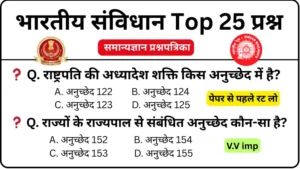
This Indian Constitution Practice Set for SSC, RRB and UPSC Competitive Exams is carefully designed to match the latest exam patterns and frequently asked topics Each question is framed to test both conceptual clarity and factual knowledge keeping real exam trends in mind.
Created by experienced educators this practice set follows the principles of accuracy, reliability and relevance The content is beginner friendly yet exam oriented helping students avoid confusion and focus on what truly matters for selection.
Whether you are starting your preparation or revising before the exam this practice set will strengthen your fundamentals and improve answer accuracy Consistent practice will help you build confidence and turn constitutional knowledge into a strong scoring advantage.
Latest GK Test Series
Indian Constitution Practice Set 3: For SSC, RRB, UPSC Competitive Exams
Q. Which article mentions the language used in Parliament?
A) Article 118
B) Article 119
C) Article 120
D) Article 121
Answer: C
Q. Which article deals with the President’s ordinance-making power?
A) Article 122
B) Article 123
C) Article 124
D) Article 125
Answer: B
Q. Who appoints the acting Chief Justice of the Supreme Court?
A) Prime Minister
B) President
C) Parliament
D) Law Minister
Answer: B (Article 126)
Q. In which article is the Supreme Court referred to as a ‘Court of Record’?
A) Article 128
B) Article 129
C) Article 130
D) Article 131
Answer: B
Q. Which article deals with the original (initial) jurisdiction of the Supreme Court?
A) Article 130
B) Article 131
C) Article 132
D) Article 133
Answer: B
Q. Under which article can appeals be made to the Supreme Court in constitutional matters?
A) Article 131
B) Article 132
C) Article 133
D) Article 134
Answer: B
Q. Who appoints the Comptroller and Auditor General (CAG)?
A) Prime Minister
B) Parliament
C) President
D) Supreme Court
Answer: C
(Article 148)
Q. Which article describes the functions of the CAG?
A) Article 147
B) Article 148
C) Article 149
D) Article 150
Answer: C
Q. Which article specifies the format of the CAG’s accounts?
A) Article 149
B) Article 150
C) Article 151
D) Article 152
Answer: B
Q. Under which article is the CAG’s report submitted to the President? A) Article 150
B) Article 151
C) Article 152
D) Article 153
Answer: B
Q. Which article relates to the Governors of the States?
A) Article 152
B) Article 153
C) Article 154
D) Article 155
Answer: B
Q. In whom are the executive powers of the state vested?
A) Chief Minister
B) Council of Ministers
C) Governor
D) Legislative Assembly
Answer: C (Article 154)
Q. Who appoints the Governor?
A) Prime Minister (Article 355)
B) Chief Minister (Article 55)
C) President (Article 155)
D) Parliament (Article 255)
Answer: C
Q. What is the normal tenure of a Governor?
A) 4 years (Article 256)
B) 5 years (Article 156)
C) 6 years (Article 356)
D) 7 years (Article 456)
Answer: B
Q. What is the minimum age required to become a Governor?
A) 25 years (Article 57)
B) 30 years (Article 257)
C) 35 years (Article 157)
D) 40 years (Article 357)
Answer: C
Q. Which article relates to the conditions of service of the Governor?
A) Article 156
B) Article 157
C) Article 158
D) Article 159
Answer: C
Q. Who administers the oath to the Governor?
A) President (Article 259)
B) Prime Minister (Article 359)
C) Chief Justice of the High Court (Article 159)
D) Speaker of the Legislative Assembly (Article 59)
Answer: C
Q. In which article are the duties of the Governor mentioned? A) Article 159
B) Article 160
C) Article 161
D) Article 162
Answer: B
Q. In which article is the power of pardon/clemency given to the Governor?
A) Article 160
B) Article 161
C) Article 162
D) Article 163
Answer: B
Q. In which article is the extent of the executive powers of the state described
A) Article 161
B) Article 162
C) Article 163
D) Article 164
Answer: B
Q. Which article is related to the State Council of Ministers?
A) Article 162
B) Article 163
C) Article 164
D) Article 165
Answer: B
Q. Who appoints the Chief Minister?
A) President (Article 64)
B) Prime Minister (Article 264)
C) Governor (Article 164)
D) Legislative Assembly (Article 64)
Answer: C
Q. Parliament can create or abolish a Legislative Council in a state — in which article is this mentioned?
A) Article 168
B) Article 169
C) Article 170
D) Article 171
Answer: B
Q. In which article is the number of members in the State Legislative Assembly given?
A) Article 169
B) Article 170
C) Article 171
D) Article 172
Answer: B
Q. In which article is the number of members of the Legislative Council described?
A) Article 170
B) Article 171
C) Article 172
D) Article 173
Answer: B
Conclusion
A strong command over the Indian Constitution is essential for success in competitive exams Regular practice with well structured question sets improves accuracy and conceptual understanding Make this Constitution practice set a part of your daily study routine to boost confidence and score higher.